 Huacachina Tours from Lima
Is Huacachina Worth It? An Honest Look
Last reviewed September 2026
About 100 people live in Huacachina year-round, on the ring of sand around a lagoon that would not exist today without a pump. So is Huacachina worth it? Yes, if a few hours of dune buggy, sandboarding and a desert sunset are what you're after, and you don't mind that the water in front of you is managed rather than wild. No, if you were picturing an untouched natural spring, since the lagoon has been kept full by pumping from the Ica-Villacuri aquifer since around 2015, after decades of over-extraction nearly drained it. Tours from Lima that include the oasis run from about $49 to $135 per person. Below is what the oasis actually gives you, the part most pages leave out, and who should spend their one free day somewhere else.
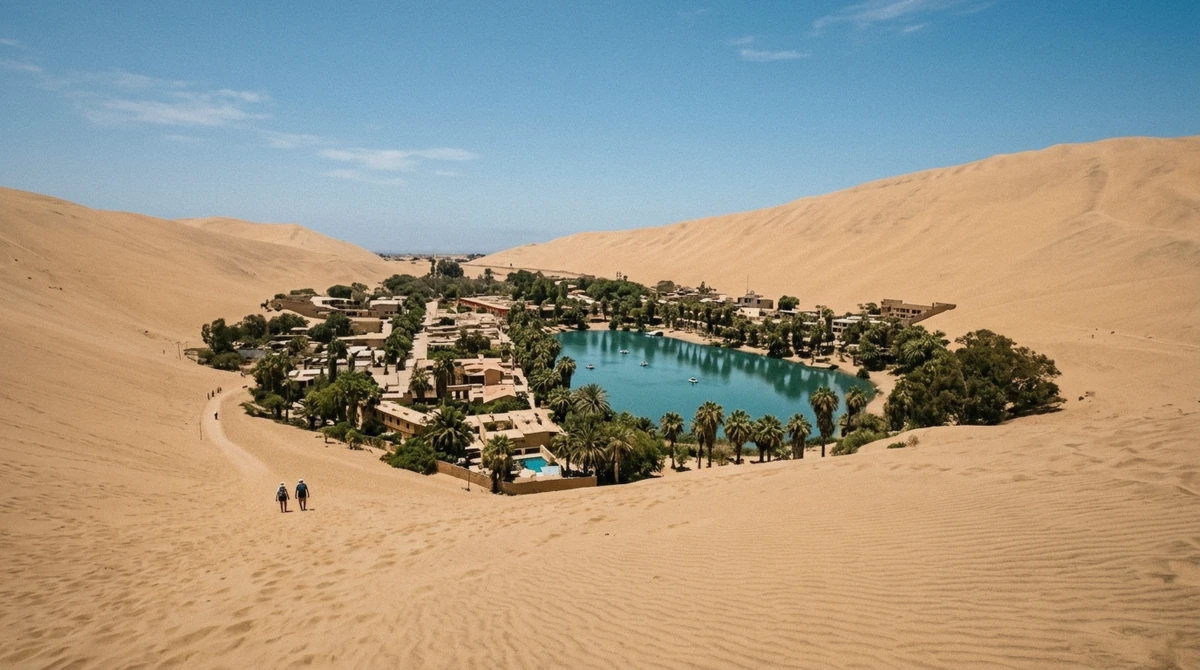
Quick answer Yes for the buggy and the dunes, with one honest catch about the lagoon
About 100 people live in Huacachina full time, and the lagoon they live around is pumped, not natural: decades of aquifer over-extraction drained it before water started being pumped back in around 2015. Worth it for the dune buggy, sandboarding and the sunset over dunes that rise to roughly 200 meters; not worth reworking your whole itinerary around if an untouched desert spring was the draw. Tours that include the oasis run from about $49 to $135 per person.
Key takeaways
- Weigh this against the Huacachina day trips we compare before booking, since the buggy and fees are priced differently on each one
- The lagoon is pumped, not natural; over-extraction from the Ica-Villacuri aquifer drained it and pumping has kept it full since about 2015
- The village has around 100 permanent residents and the lagoon loop is a 15-minute walk
- Dunes around the oasis rise to roughly 200 meters, the setting for the buggy rides and sandboarding almost every visitor comes for
- Guided day trips from Lima, like the Lima Experience sunset picnic tour, run 16 to 19 hours door to door with 04:00 to 05:00 pickups, so weigh a day trip against staying over
- Where the buggy isn't already included in your tour, it runs about S/55 (roughly $15) on site, part of what a Huacachina trip actually costs
What Huacachina Actually Is
Huacachina is a small village built around a lagoon roughly five kilometers from Ica and about 300 kilometers south of Lima on the Panamericana Sur. It is genuinely tiny: around 100 people live there year-round, and walking the full loop around the lagoon takes about 15 minutes. What makes it a destination is what surrounds the water rather than the water itself: dunes rising to roughly 200 meters ring the oasis on every side, tall enough that a dune buggy needs several minutes just to climb the first ridge before the sandboarding runs begin.
The Pumped Lagoon, and Why It Matters
The postcard image of Huacachina implies a natural spring in the middle of the desert. The real story is less romantic and worth knowing before you go. Through the twentieth century, wells drilled into the Ica-Villacuri aquifer for agriculture and the growing city of Ica drained the water table that once fed the lagoon naturally.
By the late 1960s around 780 wells were pulling roughly 346 million cubic meters of water a year from the same aquifer. The lagoon shrank accordingly, and by some accounts nearly disappeared. Since around 2015, water has been pumped back into the lagoon to keep it at a visitable level, according to Wikipedia's account of the oasis and a 2024 Scielo water-balance study of the region.
| Period | What was happening | Result for the lagoon |
|---|---|---|
| Early-to-mid 20th century | Agricultural wells multiply around Ica | Natural aquifer feed to the lagoon starts declining |
| Late 1960s | About 780 wells drawing roughly 346 million cubic meters a year | Lagoon shrinks well below its historic level |
| Since around 2015 | Water pumped into the lagoon to keep it full | The lagoon tourists see today is a managed, not a wild, water body |
None of this makes the oasis less worth visiting. It changes what you're actually looking at when you stand on the dune above it. This is a managed landscape sustained by pumping, sitting inside a genuinely dramatic dune field that would be worth the trip on its own.
Anyone selling Huacachina as an untouched miracle spring is skipping the aquifer study; anyone dismissing it as fake scenery is skipping how good the dunes themselves actually are.
What Makes It Worth the Trip
The dune buggy is the reason most people come, and it earns the reputation. A driver takes a loaded buggy up and over dune faces that would be a serious hike on foot, dropping riders at the top of a run for sandboarding lying face down, then repeating the climb for the next slope. Sessions on tours from Lima typically run around two hours, though some operators sell shorter or longer sunset add-ons separately.
The Turismo iPeru day trip bundles the buggy, the sandboard and every admission ticket into one fare, while the Inca Trilogy sunset day trip runs its longest buggy session, 2.5 hours, as part of its Premium fare. Late afternoon is when the light does the most work: the same dunes that look flat and pale at noon turn deep gold and cast long shadows once the sun drops, which is why almost every tour times the buggy run for the last hours before sunset rather than the middle of the day.
| Option | Typical price | Duration | Best for |
|---|---|---|---|
| Day tour with buggy and fees included | From $49 | Full day, 2 hours on the dunes | Budget travelers who still want everything bundled |
| Day tour with buggy add-on priced separately | From $57, buggy about $10 to $18 extra | Full day, buggy time varies by add-on | Travelers happy to pay for the buggy only if they want it |
| Premium day tour with lunch included | From $95 | 16.5 hours, shortest full-day option | Anyone who wants meals handled as well as transport |
| Private day tour | From $269 | Full day, private guide | Groups wanting a dedicated vehicle and schedule |

What Disappoints People
None of these are reasons to skip Huacachina. They're the parts that catch people who arrive expecting something slightly different from what's actually there.
- The lagoon is small enough to walk around in 15 minutes, and visitors expecting a large lake are usually surprised by how compact it is
- It is not a natural spring. The pumped-water history above is real, and travelers who find that out after the fact sometimes feel misled by glossier write-ups
- It is not primarily a party town, despite some traveler forums describing it that way. A handful of hostels run bars in the evening, but the oasis itself is small and quiet outside of buggy hours, closer to a stopover than a nightlife destination
- Day-trippers arriving with a Lima tour see the oasis for a few hours in the late afternoon rather than a full day, since most operators spend the earlier hours in Paracas
- Sandboards on group tours are the lie-down artisanal kind rather than stand-up boards; anyone wanting the stand-up version needs a separate operator arranged at the oasis itself
Who Should Skip It
If You want an untouched, fully natural desert landscape
Skip it, or at least go in with the pumped-lagoon history already in mind so it doesn't feel like a surprise
If You're hoping for a lively nightlife scene
Manage expectations; a few hostel bars aside, Huacachina is quiet once the buggies stop running for the day
If You get motion sick easily
Think twice about the dune buggy specifically, since the climbs and drops are the whole point of the ride
If You're traveling with young children or a pregnant traveler
Check the tour's own restrictions first; most listings exclude pregnant travelers and set a minimum age for the buggy
If You have one day in Peru and want maximum scenery per hour
Go anyway; the dune buggy and sunset over 200-meter dunes deliver a lot in a short window even if the lagoon itself is small
Worth It as a Day Trip or an Overnight?
Most visitors see Huacachina on a day trip from Lima, arriving in the late afternoon after a stop in Paracas and leaving again the same night on a tour that runs 16 to 19 hours door to door. That schedule works well if the oasis is one stop on a broader Peru trip and you don't want to spend a night away from Lima. It fits less well if you want unhurried time on the dunes without a group timetable pushing you back onto the bus for sunset. How long to actually spend at the oasis breaks down the trade-off between a day trip and staying a night, and whether it makes more sense to base yourself in Huacachina itself or in Ica nearby, where rooms are more plentiful but every evening out means another taxi.
If Paracas is also on your list, comparing Paracas against Huacachina is worth reading before deciding how to split a short trip between the two.
The Case For and Against
What we genuinely like
- Dunes rising to roughly 200 meters make for a genuinely dramatic buggy ride and sunset backdrop
- The whole village is compact enough to see on foot in under 30 minutes if you just want to look around
- Tours from Lima start from about $49 with the buggy and reserve fees already included
- The lagoon loop and dune climbs work as a half-day stop without needing a full extra day of your trip
- Sandboarding is included on most tours at no extra charge beyond the base fare
The honest downsides
- The lagoon is pumped, not a natural spring, which some visitors find deflating once they know the aquifer history
- It is a small, quiet village, not the nightlife destination some forum posts describe it as
- Day-trip visitors only get a few hours here, arriving after Paracas on most Lima tours
- The dune buggy involves real drops and turns that can be uncomfortable for anyone prone to motion sickness
- Most operators exclude pregnant travelers and set an age minimum for the buggy, so check restrictions before booking for a family
Who it's NOT for: Travelers hoping for an untouched natural landscape, anyone prone to motion sickness who can't skip the buggy, and visitors expecting a nightlife town rather than a quiet desert stopover.
Questions About Whether Huacachina Is Worth Visiting
Is the Huacachina lagoon real or man-made?
The lagoon itself is a real body of water, but it is no longer naturally sustained. Over-extraction from the Ica-Villacuri aquifer, once around 780 wells drawing roughly 346 million cubic meters a year by the late 1960s, drained the natural feed, and water has been pumped in to keep the lagoon full since around 2015.
How long should I spend in Huacachina?
Most day-trip visitors get a few hours in the late afternoon, enough for the lagoon walk, the dune buggy and sunset. Anyone who wants unhurried time on the dunes without a tour schedule should consider staying a night; the full breakdown covers both options.
Is it better to stay in Ica or in Huacachina itself?
Huacachina puts you steps from the lagoon and the dunes but has far fewer rooms; Ica has more choice and lower prices but adds a taxi each way for every evening out. Which one suits you depends on whether you'd rather walk to the dunes or save on the room.
Is Huacachina a party town?
Not primarily. A handful of hostels run bars in the evening, but the oasis is small and generally quiet once the buggies stop for the day, closer to a scenic stopover than a nightlife destination.
Is Paracas or Huacachina the better stop on a short Peru trip?
They cover different things: Paracas is the boat trip and the wildlife, Huacachina is the dunes and the buggy. The full comparison walks through which one to prioritize if you can't fit both.
Is the dune buggy included in the price of a Huacachina tour?
On most of the day tours from Lima, yes. On a few listings it's a separate add-on costing about S/55 on site, or $10 to $18 depending on the length of the ride; the cost breakdown lists which tours include it and which don't.
Go for the dunes and the buggy, and let go of the idea that the lagoon is a wild desert spring. Knowing the water is pumped doesn't make the dune field any less real, and it's the dune field, not the lagoon, that's actually worth the trip from Lima.